Download Transcript
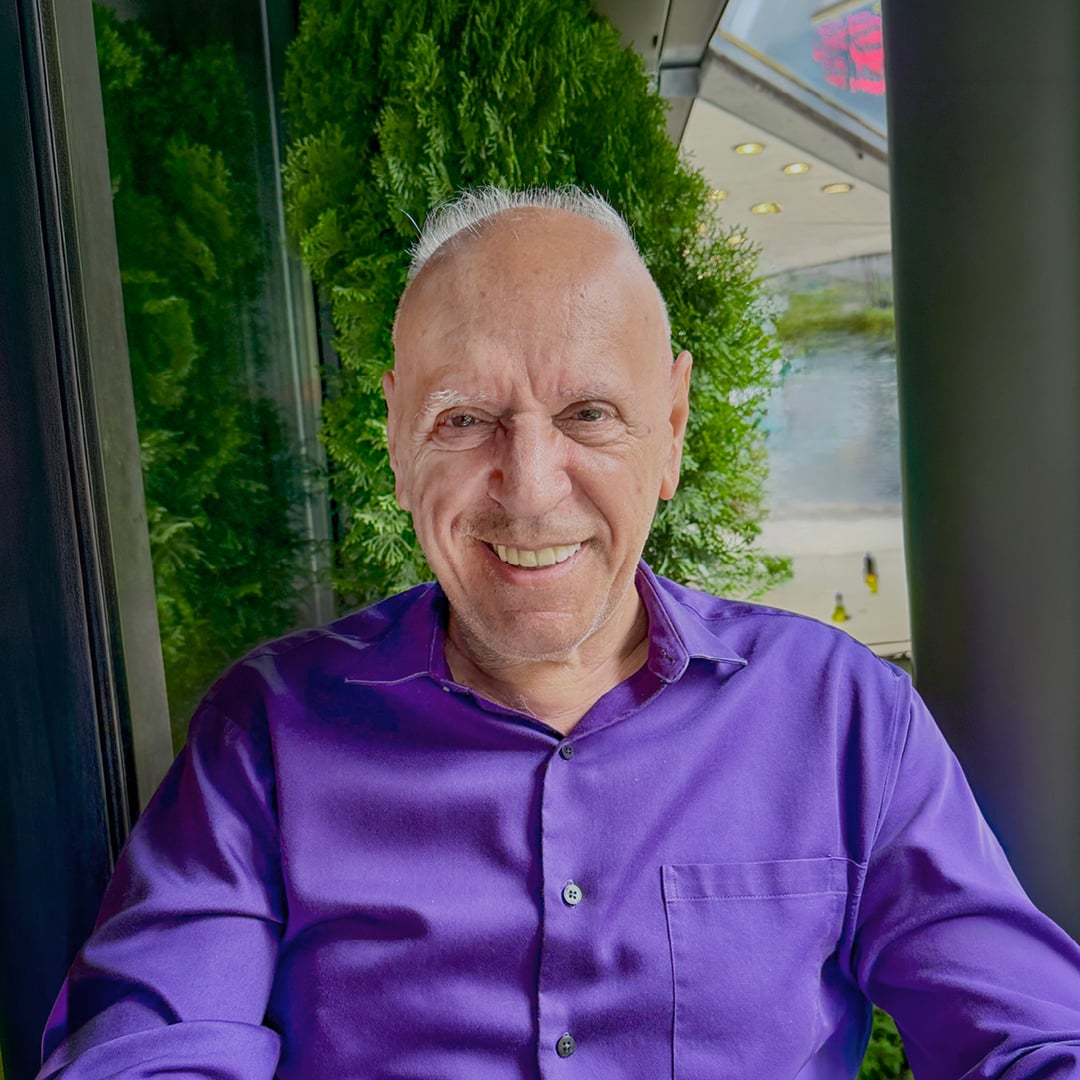
Spencer Levy
As we edited this episode, I got to thinking about classic New York tabloid front pages. Headless Body in Topless Bar might be the most famous one of all time. Why was my head in the papers? Because on this episode our headliner comes from the New York Post, where he covers two of my favorite topics, real estate and restaurants.
Steve Cuozzo
Because of the close interrelationship between commercial real estate and restaurant business. I often learn about things happening before they happen.
Spencer Levy
That's Steve Cuozzo, a native New Yorker who's been at The Post since 1972. He's worked as a writer and editor at the paper, even editing its iconic Page Six column. But he's known these days as a trend-bucking food critic who shuns the anonymity that most of his peers prefer to keep, while also reporting on commercial real estate, a mix of beats that he tells us about in his own ink-stained voice. Coming up: a New York experience. I share a table with New York Post columnist Steve Cuozzo to get the scoop on his decades of reporting in this dynamic and competitive city. I'm Spencer Levy, and that's right now on The Weekly Take.
Spencer Levy
Welcome to The Weekly Take and we are here in Manhattan with, dare I say, a Manhattan institution, Steve Cuozzo, columnist for the New York Post, lead writer for commercial real estate and restaurants, and the New York Post is the oldest, continuous running newspaper in the United States. Steve, what a pleasure. Thank you for coming out today.
Steve Cuozzo
Well, thank you for having me. And oddly enough, the room where we're sitting and doing this podcast is an institution itself. We're at Lever House on Park Avenue, which is one of the great 1950s—it's funny to call it a skyscraper because it doesn't really scrape the sky. It's famously built smaller than the zoning allowed in order to allow for open views and light. And it's a great success. And the most recent owners spent a fortune bringing it to another level.
Spencer Levy
Well, I think that speaks to what you've been doing for the last many years of writing about the changes in restaurants, the changes in real estate. This is a living, breathing example of that, about how real estate in New York is constantly evolving.
Steve Cuozzo
It's evolving and so are restaurants, no matter what happens to the city, and notwithstanding what some other detractors have to say from time to time, no city that I know of in the world has the regenerative powers, capacity that New York City does. New York has suffered a chain of almost biblical proportions — several different Wall Street crashes; 9-11; a hurricane that devastated the shoreline in Manhattan and sidelined, I think, 25% of the city's large office buildings; COVID, of course; and I don't want to talk politics. But I'm glad to say, and I hope I'm right, that commercial real estate is untouchable. The market is so strong that it really doesn't matter who the mayor is. The city is in — Manhattan in particular — is in great shape, but it isn't only Manhattan, it's the outer boroughs as well.
Spencer Levy
Why does it make sense for restaurants and commercial real estate to be covered by the same person? I think a lot of papers will break the two up or give commercial real estate to the business person, restaurants to somebody else. Tell me your world.
Steve Cuozzo
In my case it was sheer happenstance. In 1998 we had an executive shake-up in the editorial ranks. There were new people and somebody had the idea that we should have a restaurant critic for the first time in 50 years. The New York Post, we had ad support copy, nobody really covering restaurants and I was sort of available because a part of this shake-up included my relinquishing some of my former duties. So I had time on my hands and my enthusiasm for restaurants and food was well known. So somebody came up with the bright idea using one problem to solve another. Okay, Cuozzo's got time, we need a restaurant critic, why don't we try him? That's how I became a restaurant critic. A year later, it was slightly less dramatic, my enthusiasm for real estate — subjects and nobody cared about, like, nobody else cared about zoning that sort of thing — they knew that of me, too. So they gave me a chance to write commercial real estate. The first real estate column I ever did — probably November or December of 1999 — and I interviewed Steve Ross and in his office on Madison Avenue, looking out facing west and from that office you could see across the park to the site of Columbus Circle, where demolition was underway, the old Coliseum, the awful New York Coliseums, which everybody hated, to make way for what would become Time Warner Center. Although I think at the time it was still called Columbus Center. And that's an image that's stayed with me all that time. I remember saying, look at that, it looks like things are getting started, things are slowly starting to move, meaning we're on the project. And Stephen said, not so slowly anymore. And that was prophetic.
Spencer Levy
Well, sticking with Manhattan for just a moment, we'll get to Brooklyn and some of the outer boroughs in just a moment. By the way, I'm from Rego Park in Queens, so we're definitely going to get a shout out there too. But you said Manhattan's in great shape. And I'm really glad to hear that, Steve, because it's fair to say that in the last two years, the city, which is constantly evolving, may have evolved more in the past two, three years than it has maybe in the prior 10 years, even though COVID was there. And the reason being is that the office market really took a downturn, but now it's coming back in a big way. How do you see it?
Steve Cuozzo
It's back. It isn't coming back, Spencer. It is back and has been back fully at full strength, full throttle for at least a year and a half. It's funny, yesterday, in a single day, I got emails from publicists promoting this or that district, representing either landlords or business improvement districts, three of them. One was Union Square, another was Hudson Square, and the third was East Midtown. And it read as if they were all written by the same person, which is that leasing is at peak levels. There's almost no prime space available. The office recovery spilled over into the retail market and on and on, and on. And it's an astonishing phenomenon given where we were. Remember four years ago, people will never come back to offices, not only in New York City, but around the world after COVID, nobody's gonna ever want to — which is exactly what was set up in 9-11, by the way. But COVID seemed worse because it was so widespread. I remember being in Central Park in April of 2020, beautiful sunny day, almost nobody out because people were afraid to go out, even in the parks, which were regarded as essentially safe from the virus. And I would look up at the skyline, the Midtown skyline and think, well, all those office buildings, my God, they're all empty. And they were basically empty. And I thought, someday they're going to come back. Did I really believe that? It was as much wishful thinking as it was conviction. But fortunately, that's exactly what happened.
Spencer Levy
We had Larry Silverstein and Mary Ann Tighe on the show.
Steve Cuozzo
Sure. Old pals.
Spencer Levy
And Larry is as optimistic as he can be. His downtown projects at the World Trade Center doing fabulously well, just sold the building that he's going to build for American Express. So you mentioned several great neighborhoods, but downtown has really come back.
Steve Cuozzo
Well, downtown, it's not a unique market, but it's a special market. Depending on who's counting, it's between 80 and 100 million square feet, compared with Midtown and Midtown South, which is three times greater. And downtown really was in the tank for quite some time. It was in a tank for obvious reasons after 9-11. It was the tank even after that. It was a mess. And in my view, the biggest single factor about lower Manhattan was the absence of 2 World Trade Center as long as that site remained barren, vacant it suggested a number of things, principally that the recovery from 9-11 was not complete. Yes, we already have four great office buildings there including 7 World Trade. But as long is that corner site at Fulton and Church Street remained empty it suggested that there still wasn't enough demand. And as great a job as Larry did filling the other towers and Durst and the Port at the 1 World Trade, that empty site, it was sad. There was like a beer garden set up there. And I felt that a building that didn't exist cast a shadow on the rest of lower Manhattan. And now that's over. Heroic feed on Silverstein's part. AMEX's part, the Port Authority, everybody was on board with this. The most amazing thing about it is that when they broke ground three weeks ago, perhaps, there were the usual testimonials from just about every public official that ever existed. But it was an unqualified shout out to this project, it's going to bring jobs, all this. So that's a remarkable thing. I can't wait to see it go up.
Spencer Levy
And now let's bring the retail. I think it's fair to say that there are pockets of retail in Manhattan that have recovered quite well.
Steve Cuozzo
It depends on where you go. I mean, I read all these reports that all the brokerages put out, REBNY puts out, Real Estate Board of New York, and they're always filled with these cheery, optimistic assessments of the retail scene in Manhattan. You know, vacancies are reduced, and asking rents are up, and all this stuff. And as I've written a number of times — and I think they hate me for it — it's misleading. Because, yes, undeniably if you walk up this block, this street Bleecker Street, west of a certain avenue in the village, there are no vacancies. It's great. But all of these surveys, when they define prime corridors, they tend to leave out the corridors that are prime, but which stink, where there's still tons of vacancies. My office is on 6th Avenue and 47th Street, 1211 6th avenue. And although there has been a revival in the last couple of years, a lot of new food and beverage operations coming in, including a few major restaurants, there was still ridiculously too many vacancies. Right across the street from me, I think 1212 6th Avenue, it's an Axel Stawsky building, a Gap store closed before the pandemic. It's still vacant. And in a truly efficient market, that would not be the case.
Spencer Levy
When I visit Manhattan — I'm from New York but I live in Baltimore now — and my daughter wants to come here, we go down to SoHo, that's where we go.
Steve Cuozzo
SoHo is unbelievable. There's nothing like it I don't think in the world. And I know shopping districts in London, Paris, there's nothing like SoHo. You can walk for blocks and blocks and not find a single vacancy. The center of gravity of retail really, at least in terms of occupancy, really moved down there years ago. It's 5th Avenue in the 50s where there are glaring vacancies, parts of Madison Avenue, some of the streets around union square. SoHo is phenomenal. And they're luxury brands, as well as the kind that appeal to tourists, day trippers from New Jersey. You know, they just come in through the Holland Tunnel, they clog the sidewalks for two days and then they go home and maybe buy nothing. The lack of retail availability in SoHo has compelled some of the luxury brands to move to the meatpacking district. I still find it bizarre that — was it Baccarat, I think — closed their store on Madison Avenue and opened on 9th Avenue in the Meatpacking District. If it works for them, fine. I'm just amazed.
Spencer Levy
Yeah, and what I love about SoHo is not just that they have such a density of retail, it's that they've a combination area of some national retailers. Sephora's got a big store down there, but they also have a lot of local niche brands, which creates a cool factor that's hard to replace.
Steve Cuozzo
And they've got brands you would never expect. Ferrari opened a store down there. They're not selling cars, like the dealership that's a block from here on Park Avenue. They're selling all kinds of Ferrari stuff. Shirts, jackets. I haven't been in there, but it's a huge store.
Spencer Levy
Well, I would tell you that the retail story in Manhattan is complex not only because of the corridors that you've mentioned there's some vacancy. It's also complex because the amount of international travelers is down.
Steve Cuozzo
It is.
Spencer Levy
And they were one of the top buyers of luxury retail.
Steve Cuozzo
Yeah, and the hotels complain, oh yeah, we're full, but it's all domestic people, they don't spend a lot. Some of the restaurants say the same thing. Bear in mind, I should say this, nobody loves restaurants in New York City more than me, but restaurateurs are crybabies. Something is always—how's business, not good. You know, it's like the old Garment District. What's the problem? Well, it rained. It rained last week. And they don't come out on Monday anymore. All these different things. That said — and of course the largest issue is that people, shopping habits change. Starting 20 years ago, shop from home. I think it's a remarkable testament to the underlying strength of retail, at least in New York — and I can't speak for what the case is in other cities — that there are relatively few vacancies, as there are.
Spencer Levy
So I think there are certain categories where people will still be particular and that maybe that's what SoHo is. They're smaller stores, many of them are smaller, many are nichey, many of them are influencer heavy, but they're cool, they're different, and you can't get it online.
Steve Cuozzo
There's one store there, they let people in like 10 at a time. Partly that's to diminish the crowding, and partly it's to increase the appearance of demand. So you've got these people waiting online for 20 minutes to go into a store that sells, I don't know what they sell. Sportswear? Go figure.
Spencer Levy
I read with great joy about a year and a half of your columns on restaurants, and what struck me about your columns was the diversity of food that you mentioned, starting with the most recent one, talking about tremendous Indian restaurants in New York City. And people think of New York, they think, you know, the Italian restaurants, some of the old kosher restaurants, of the old Spanish restaurants, but this was Indian, Japanese, these were different cuisines. Tell me about that.
Steve Cuozzo
Well, okay, for many years, we've always had Indian food in New York, mostly it was second rate or third. And for decades, as long as I can remember, London was always regarded as commanding the market for high quality Indian cuisine. And there are a number of reasons for that. It's very different now. In the last three, four years we've seen the rise of a new Indian cuisine in New York. Some of it's from the north of India, which is what New Yorkers are most familiar with, but a lot of it now is from the south and from the coasts. And it's a whole different world. The fact that you have to fight to get into these places, it's not a flash in the pan. This is a permanent phenomenon where Indian cuisine has risen to the level of popularity and prestige as Korean cuisine did in the 10 years prior. And as Japanese cuisine has done. And this phenomenon illustrates the incredible regenerative powers of the New York restaurant scene, which in a way reflects it's always evolving. It's always changing. People sometimes still go to Little Italy for what they think is Italian food. There hasn't been in Italian in Little Italy running a restaurant in 30 years. But times have changed. If you go to Queens, the neighborhoods or especially in western Queens, within range of the subway lines. Queens boosters make a lot of this. We speak 200 different languages and all that. And it's all true. So do the restaurants.
Spencer Levy
Well I grew up in Rego Park and I used to go to Ben's Best Deli on Queens Boulevard with my grandmother and I miss those meals. I just do. I used always to go a very small kosher place called Seymour K's which hasn't been there in 40 years but they used to serve like literally vats of chicken fat on the table. Sounds awful but at the time it was excellent.
Steve Cuozzo
I think Rego Park is now largely Russian, isn't it?
Spencer Levy
It is. It has changed to a largely Russian population. But what's interesting is not just the diversity of foods. Indeed, you mentioned there was a great Korean restaurant, if I pronounce it correctly, COTE 550.
Steve Cuozzo
It's a block and a half from here. It's at 550 Madison.
Spencer Levy
In addition to the tremendous review you gave of that restaurant, there's a math thing we need to get through here, which is just the cost, the time, expense to build that place because that place is big. It took them somewhere between three and five years to get it done. How much does it cost to build a restaurant in this town?
Steve Cuozzo
I mean, it depends entirely on size and neighborhood and what kind of build that you're doing. Anybody who tries to open anything larger than a bread box without spending a million dollars, they don't know what they're getting themselves into.
Spencer Levy
I think you're low balling, Steve. I think that this restaurant may have cost north of 10.
Steve Cuozzo
No, I'm not talking about that kind of restaurant. I'm talking about a mom-and-pop, you know a little Thai restaurant on 2nd Avenue somewhere. In the big leagues they are all in the mega millions range to build and in almost every case we never really know the specifics, but we don't usually anyway, but landlords of office buildings in particular are so hungry, desperate for a marquee named restaurant. They'll pay for every damn thing. They'll pay for the build out, you know, all the office buildings now must have a great restaurant. In this building, Lever House, there's a fine restaurant downstairs called Casa Lever and run by really good people who run great Italian restaurants. The next block down, Seagram building, that was the home of the Four Seasons restaurant for nearly 50 years before it closed and now they have a restaurant. The grill built into the original architectural bones. The Four Seasons put the Seagram building on the map. Nobody cared in 1959 about Mies van der Rohe. They didn't care about the architect, unless you were in the field of architecture. They cared about this restaurant, which was a defining power center of New York. And today, just about all of the new office buildings, including the ones at Hudson Yards. Have some kind of signature restaurants. Just about everywhere, it's astonishing.
Spencer Levy
My father was a partner at Brian Cave, and Robinson Silverman, which used to be right over here at 230 Park. And we had a little neighborhood here, right where we're sitting, which had all the Italian restaurants. It had Joe and Rose. It had Bruno's Pen and Pencil. It had Nanni's. It had Christ Cella. I can go right down that list.
Steve Cuozzo
I remember them all.
Spencer Levy
Palm I, Palm II. These places weren't good. They were great. And they're gone.
Steve Cuozzo
They're mainly steak houses, all of them.
Spencer Levy
My point is very simple. Even though old school might be gone, New York evolves, and that's really the story here. The story is evolution. And for anybody who thinks that you can't get back to the good ol' days, the good ol' days are today.
Steve Cuozzo
Exactly, I'm with you totally on this.
Spencer Levy
I guess the real question is this, we know — we're both foodies, and I want restaurants to thrive. I don't want them to survive. I want them thrive. I'm prepared to pay $30 for a lychee martini if they give me an extra lychee in there, okay? That's kind of how the foodie I am. You're the food critic for The Post. What do you say to restaurants if they want to make it?
Steve Cuozzo
Not an easy question, but it's always, I think, the one constant in whether or not a restaurant succeeds. The first concept is strictly business level. It's the lease. A lot of guys have signed leases that they can't afford. Danny Meyer once said to me, look, Steve, he said, if you're paying a certain amount of money for rent, you're in business for yourself. Above a certain number for any given location, you are working for your landlord. And that has wrecked more restaurants. They're under-capitalized when they open. They don't realize what they're in for. But that factor aside, what keeps a restaurant popular over a long period of time? Always the same: the perception of value. Doesn't matter whether it's in a cheap restaurant or middle-priced or whatever. And of course, in the short term, there's the scene factor. You know, who's going? Am I going to see a supermodel? Am I going to see, you know, a governor or whatever? And then, of course, we have the influencers who have changed the landscape entirely on TikTok and Instagram. Critics, newspaper, magazine critics no longer have anything like the clout that we once did. An influencer who claims a million followers, whether or not they have those million followers or not, can affect the destiny of especially a new restaurant more than all the establishment legacy critics combined. And that's unfortunate. And I understand now that some owners are finally fighting back. They're saying no. And then, of course, certain kinds of restaurants just have a chemistry. That's the mysterious thing about the business. It's not chemistry. It's alchemy. It's almost supernatural why certain restaurants catch on, develop a following, and others don't. And to this day, I am mystified. I've seen so many fine restaurants go out of business. Again, this may have to do with, you can't know what their bottom lines are. You can't what their balance sheet is like. But if I see a place that is busy all the time, I'm always crushed when it disappears just like that.
Spencer Levy
I think for our listeners, they should really break down what Steve just had to say, because the one thing that Steve didn't mention when he was talking about a successful restaurant was the food. He was talking about the lease. He was talking about the service. Food is important, but it's these other factors that make you long-term successful.
Steve Cuozzo
Absolutely. There are some, I won't mention them here. There are certain Italian restaurants in Manhattan, the food is awful. I mean, any of my late aunts and uncles, my grandmother could have made much better pasta than these places, and they're always filled. Perception of value. People can go to certain restaurants and, oh my god, they serve family style. You know, it looks good, they deliver a whole bunch of things. But then you have restaurants like Marea, which is a great restaurant still after, I guess, 15 years now, going on 20, which was an Italian restaurant at the very high end. There, it is about the food, but I suspect that for many of their customers, it isn't about the food. It's the perception that this is the hot place. It is comfortable, it's beautiful. Il Gattopardo on west 54th Street, one of my favorite Italian restaurants, which is more of a southern Italian restaurant, is a great restaurant. They started out in a much smaller space, a few doors down, and they had the great fortune to open literally the week after 9-11. Yeah, it's wonderful. And that is about the food. It's not a clubby place in any sense, but it's become a clubhouse for a lot of real estate people in Midtown who work nearby.
Spencer Levy
And the perception of value isn't that you're getting a cheaper meal. It means that you are getting value there that's beyond the meal. It is the hip factor. It's the cool factor, being in the same room as heavy hitters in the real estate business and you like being in that room. And I want to bring up an article that you wrote a few months ago about Steve Ross and West Palm Beach. And I think that Steve is the epitome of creating demand, of creating value, and he did it in West Palm because his buildings not only have the highest rents in the state of Florida, and that includes Brickell in Miami, he also just bought the Ben Hotel next door. He's got a lot of the retail. He is owning that area, that sub-market, and creating value.
Steve Cuozzo
Yeah, Steve Ross always had a holistic vision of real estate development. Time Warner Center proved that. Oh, it's a mall, they never work in New York. Well, it worked very well. There's been some turnover, obviously. There's always turnover. But what he's doing in West Palm, this is another world for him entirely. I mean, Steve is 85 or something, and he's at the height of his game. And he was able to work on a blank canvas, not hamstrung, constrained by zoning issues, 38 community boards all saying, no, you can't do this. And there was a lot of property that he was able to purchase at relatively low cost with his partners. I was down there in April with my wife. He's got so many restaurants in those buildings. There's a Milo's, where we had dinner. These are all New York restaurants. Felice, Harry's, and I can't even, the list just goes on and on and one. What does that mean? It means that they're all good restaurants. They all provide value and they have a formula that works wherever they open because they're well-financed and they can hire good managers. People want to work for them so they get the better quality staff and New Yorkers just flip when they go down there. Oh, my God, I didn't know I could get all these New York restaurants in West Palm.
Spencer Levy
So we're talking about the evolution of markets. We just mentioned West Palm. We talked about the evolution of restaurants here in New York. What do you see as the future of the restaurant scene here in Manhattan? We've seen this tremendous evolution in the last five to 10 years of these super high-end restaurants, famous chefs, all different cuisines, not just here, but it might be Queens, it might be Brooklyn. How do you see it?
Steve Cuozzo
No way to predict. This too is an imponderable. What I will say is that there's a welcome influx of younger creators. I'm not necessarily calling them chefs, although that may be part of what they do. Like Simon Kim, who is the creator of COTE and of Coqodaq and other restaurants, who's I think probably about 40 years old, I'm guessing. But there has not been a replacement yet for what I would call the old guard. There's a class of New York chefs who are venerable, who are well-loved, and they include, obviously, Eric Ripair and Daniel Boulud and Vongerichten and Andrew Carmelini and some others. And, you know, they're not getting younger. And as they continue to not get younger, I don't see their successors. What I do see are entrepreneurs who are visionaries in different ways. Stephen Starr, who in my view is the equal of Danny Meyer, and opened great restaurants. He started in Philadelphia, but he's opened great restaurants in Manhattan. I wish he would do one downtown. The entrepreneurs who have access to capital around the world, sovereign wealth or hedge on money that you don't even know about, creating these empires. And that's new. We're getting more restaurants opening in New York from far away. They're all coming here. And so Double Knot is an extraordinary, basically a kind of Japanese steakhouse in the West 50s that originated in Philadelphia, Michael Schulson, I think. And then he opened in Miami, and now he's here. And he's usually successful. We're seeing much more of that. There's a Mexican steakhouse called Cuerno, which I had never heard of, that's wonderful, also in the west 50s. So a lot more, for whatever reasons, whatever the driving force is, I see more restaurants from—
Spencer Levy
Outside coming in.
Steve Cuozzo
—from overseas coming to New York.
Spencer Levy
But Steve, I would be completely remiss if we didn't spend the last couple of minutes here talking about your career at the Post. And you've been at the post, correct me if I'm wrong, for over 50 years.
Steve Cuozzo
Yeah, I'm a very strange animal, very unique animal, because the newspaper industry, historically, traditionally, has been a place where, even in the old days, lifers were rare. People moved around a lot. The reason I'm still there, it has to do with circumstances and luck, because the circumstances means that the paper has changed since my first day in 1972 when Dorothy Schiff owned the Post. The papers changed hands a number of times, and under each owner, the editors and the direction of the paper has changed several times. So at different times, I was an assistant managing editor, I was features editor, I was business editor, all these different titles, and it was never as if I had the same job. I had so many different jobs that each one felt new, because it was. And the second part of it is good luck, good fortune. The paper almost went out of business more times than I could recount, and somehow survived each time. The paper lived through the travails of New York City, which included 9-11 and COVID most especially, most tragically. It's been an amazing phenomenon for me, and I still love what I do. I love writing about restaurants and commercial real estate equally. And I also write on urban affairs. Cultural topics as well, although real estate and restaurants are principal topics, and I've never gotten tired of it.
Spencer Levy
Well, you wrote a book in 1996 called It's Alive — How the Post Cheated Death and Stuck Around, talking about the institution of the New York Post. Listen, there's a lot of people out there who are a New York Times person or Wall Street Journal people. There are people that are Post people. I'm one of those rare people. I read all three of them. But they each have their own brand, but the Post brand matters.
Steve Cuozzo
Yeah, and now, of course, nothing is the same as it was. I mean, of course, as is true of every other newspaper, including the Times, our larger circulation is digital. And so we've got people all over the world, and certainly the country, reading the New York Post, who know nothing or little about the paper's history, background. It's a different media universe. Apart from politics, it's so celebrity driven that it's kind of unrecognizable to me. Years ago, I was in charge of Page Six, the Post's groundbreaking gossip page. I wasn't the editor. I was the managing editor of Page Six, meaning I didn't write stories, but I did edit, sometimes with a heavy hand, sometimes not, whatever was going through. For many, many years, we were the only game in town. Now, every day, Page Six and the people who write it, create it, they wake up into a world where it's not like the old days. You've got a million things coming at you from every direction. Something you think is exclusive isn't. So they've had to adapt to that. And it's a different media landscape. It's a different universe. And I'm glad to say that Page Six continues to be a prime mover in this new universe of what we used to call gossip. That's all changed.
Spencer Levy
Well, in this new universe, one of the really fascinating things about today's conversation, Steve, was all of these titans of real estate that you mentioned in the conversation and your personal relationships with them. I say this as a newspaper thing, not as a philosophical thing. I think it's still possible to get a scoop, meaning get the story first in real estate, maybe in restaurants more than it is in the celebrity world. Is that true?
Steve Cuozzo
Yes, it is. It certainly is possible. I've been fortunate to break a number of major stories involving restaurants in New York and what was happening to them. I mean, I knew about and I wrote about Nobu, which at the time was the most famous restaurant in New York, leaving its long time home in Tribeca and moving to Fulton Street downtown. People did like double takes when they saw this in the paper. And that's fun. I enjoy—because of my dual perspective, and because of the close interrelationship between commercial real estate and restaurant business, I often learn about things happening before they happen, and before anybody else knows about them. Now, I can say that I broke every major story, but if you were to go back over the last 18 months, I'm sure I've had three or four that came before anybody.
Spencer Levy
And by the way, Steve is smiling. Is it fair to say you still love it?
Steve Cuozzo
Yeah, that was more than fair.
Spencer Levy
So final question, where am I going to dinner tonight? I knew you were going to ask me that. So Steve Cuozzo, as the restaurant guru in New York, you're traveling outside of New York. How are you picking a restaurant?
Steve Cuozzo
You mean, me personally?
Spencer Levy
You personally. If you're travelling, you have a business trip—
Steve Cuozzo
I've got to tell you, Spencer, it's funny because sometimes I know weeks in advance I'm going to some place, but just as many times, I have no idea where I'm going tonight. So this will be a dialog between me and my wife, Jane. And the dialog will take many different routes and tributaries and all that. I've gotta see what's available and all of that. What's the weather gonna be like? These are all major factors. Where I'd like to go tonight if I'm able to. I don't know if you knew the old restaurant, pub called Neary's which was an institution at east 57th Street near 1st Avenue for like 80 years and Jimmy Neary the owner passed away a few years ago and his daughter took it over. She was a Chase banker so she had the resources for—maybe Goldman—she had the resources to run it. Still it was time to get out of it. So that closed. It was empty for a year and a half and it's just now reopening as something called the Derby Club. And I've seen the images, it's beautiful. It looks like a better version of what Neary's was. Cozy, sexy, big booths, great institution. And if I'm able to get a table there tonight, which I may or may not be, that's where I want to be.
Spencer Levy
Well, on behalf of The Weekly Take, what a privilege to have Steve Cuozzo, columnist for the New York Post, for both commercial real estate and restaurants. Steve, thank you for your time.
Steve Cuozzo
Spencer, thank you. It's an honor for me to be here, and I'm really honored to be part of what's a great institution.
Spencer Levy
Thank you and I meant while I said you are an institution here in this town. It was a privilege to have you.
Steve Cuozzo
Thanks again. If you'd forgive me, I've gotta run.
Spencer Levy
It seems there's always a deadline looming in the city that never sleeps. We'll be back on the beat ourselves next week with more headlines from the world of commercial real estate. You can find out more on our homepage at CBRE.com/TheWeeklyTake or wherever you listen. Also drop us a note with your feedback or any story ideas you'd like us to cover. We'd love to hear from you. For now, thanks for joining us. I'm Spencer Levy. Be smart. Be safe. Be well.
.jpg)